This article is also available directly on the JWeekly Website!
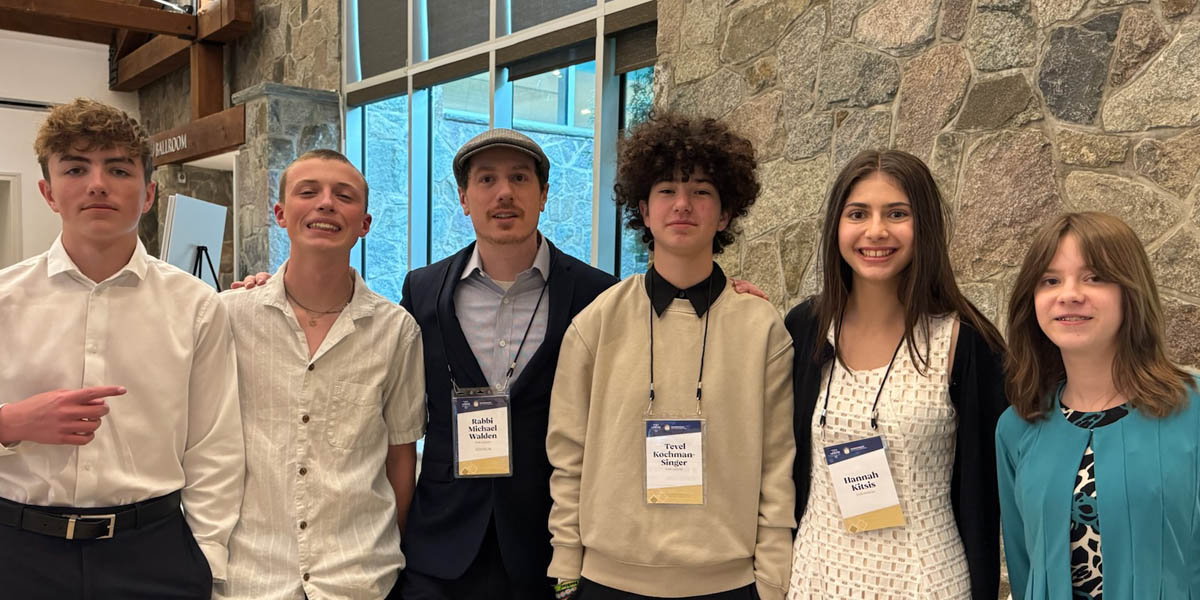
This spring, three liberal Jewish teens from my Los Gatos Reform congregation spent a weekend in New York debating Jewish law with Conservative and Orthodox teens from around the country.
We had been preparing for months for the Maimonides Moot Court Competition, named for the renowned Torah scholar.
Exclusively using Jewish tradition and ethics, the teens focused this year on whether there should be limits on the types of data that social media networks can collect and for what purpose.
Initially, all three of our teen participants were anxious about interacting with teens from Jewish worlds they didn’t know and debating with sources that were unfamiliar to them. The Talmud and codes of Jewish law are not always what we call “beginner friendly,” yet we learned them as a team.
We arrived at the debate to see that the majority of attendees were Conservative and Orthodox day school students. But the teens worked hard, using novel arguments and ideas that impressed the judges.
What’s more, they befriended students from across the country and learned from and with Jewish kids from different backgrounds. All three teens asked to attend next year because they had fun, wanted to reconnect with their new friends and were proud that they did as well as they did. I was proud, too, especially when I spoke the next week with one of the judges about their performance.
We intentionally chose to step outside our denominational boundary to engage with broader Jewish traditions and communities.
Attending the competition was an unusual move for our synagogue. The Reform Jewish world has its own events, youth groups, retreats and opportunities in abundance. But we intentionally chose to step outside our denominational boundary to engage with broader Jewish traditions and communities. We found that our teens had the opportunity to develop and enrich their Jewish identity without compromising the modern Jewish values that our synagogue is based upon.
Current global and local events have made clear the importance of Jewish unity. Yet I hope we do not conflate unity with uniformity. Unity allows us to offer mutual support to our diverse Jewish community and enriches it as well.
“Who is wise? One who learns from everyone,” our tradition teaches us. Yes, we are motivated by this dictum. But there is a second interpretation of it, a flip side: How can we help others within our tradition grow if we do not show up?
That other great dictum, “two Jews, three opinions,” has always reflected an uneasy truce or understanding among Jewish denominations even during the best of times. But it is during times of great stress that I believe we need to embrace this more than ever. When things are easy, who needs the injunction? It is when things get hard, when openness and generosity are not our default strategies, that these ideas start to matter.
By showing up in wider spaces, progressive Jewish communities can sow the seeds of a future where we can learn from — and share with — Jewish voices that don’t always align with ours. A future where it is easier to learn and share with each other.
The teens from my synagogue who went to New York now have anchors of Jewish experiences beyond their own and ties that go both ways. I hope, going forward, that we learn from their example.